

How to Remove UV DTF Stickers From Glass, Tumblers and Plastic
UV DTF stickers are built to last, but they can come off. A little heat softens the adhesive, a plastic scraper gets under the edge, and a cleaner wipes up whatever residue stays behind. Below we go through the whole process step by step, point out the surfaces that call for extra care, and go over the safety basics: gloves, safety glasses and fresh air.
The short answer
Warm the sticker with a heat gun or a hair dryer. It usually takes 20 to 60 seconds; check as you go and stop once the adhesive has softened. Lift one edge with a plastic scraper or an old plastic card and peel slowly, and if it hardens again, warm it again. Let the surface cool, clean off any leftover adhesive with rubbing alcohol or an adhesive remover, and wash with soap and water. On glass and metal, a heat gun and a plastic scraper work best. On plastic, use gentle heat so the item doesn't warp.
What you need
- Grab a heat gun or a hair dryer. The hair dryer runs gentler and handles most surfaces; the heat gun pushes more heat and gets the job done faster.
- Grab a plastic scraper, a plastic razor blade or an old plastic card. Glass and coated cups are far less likely to get scratched by a plastic edge than by a metal one.
- Rubbing alcohol (isopropyl alcohol) or an adhesive remover, and a soft cloth to go with it.
- Dish soap and warm water for a final wash.
- Gloves and safety glasses.
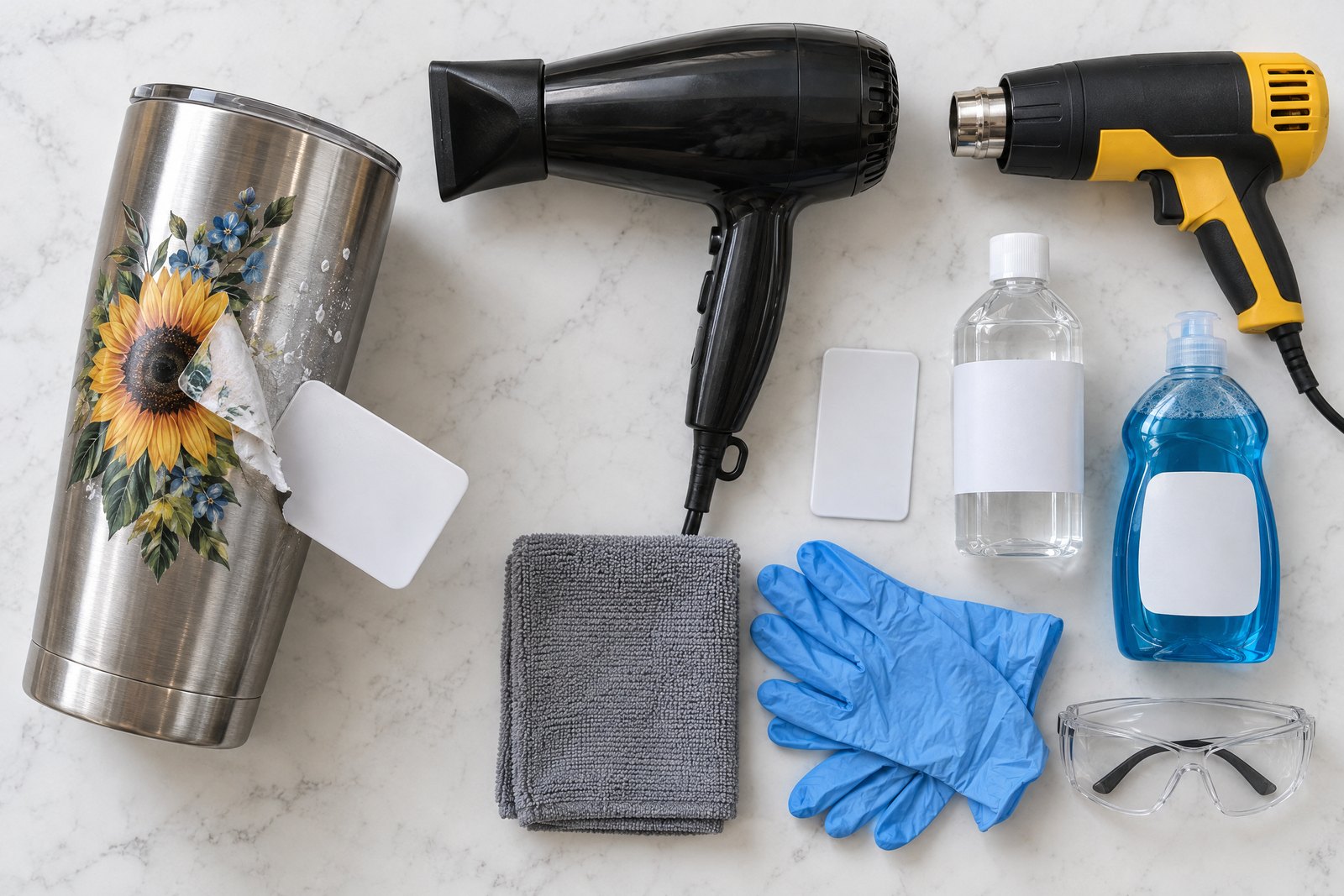
Safety first: gloves, glasses and fresh air
Peeling off one sticker sounds like a small task, yet it combines a hot tool with liquids that can ignite. A few simple habits keep the job safe.
- Wear gloves. Both the safety data sheet for 91% isopropyl alcohol and the one for Goo Gone's liquid adhesive remover call for protective gloves. They also protect your fingers from a surface that hasn't fully cooled.
- Wear safety glasses. According to its safety data sheet, rubbing alcohol causes serious eye irritation, and scrubbing a curved cup makes splashes easy.
- Work with fresh air. Crack a window open or take the job outside. The alcohol's safety data sheet says to use it only outdoors or in a well ventilated area, and a heat gun manual we looked at warns that holding heat on one spot too long can create fumes you'll breathe in. Move the heat around as you work.
- Keep heat and solvents apart. With a flash point around 57°F, 91% isopropyl alcohol is highly flammable; its vapor can ignite at room temperature. Switch the heat gun off and wait for the surface to cool before opening the alcohol. Since the nozzle remains hot for a while after shutdown, set the gun down far from the bottle and the cloth. Some adhesive removers, especially aerosol sprays, are flammable as well, so read the label on yours.
- What about a mask? Fresh air comes first. Open a window or work outside. Follow the label and the safety data sheet of the alcohol or remover you use. A regular dust mask won't help. It catches dust and other tiny particles, but not the vapor that comes off alcohol and other solvents. NIOSH, the U.S. agency that approves respirators, says the same. If the label calls for a respirator, use one made for that kind of vapor, in the right size and fitted well. Keep the room ventilated while you wear it.
Step by step: heat and a plastic scraper
-
1
Check the surface first.
If you're working on plastic, painted or powder coated items, dab your alcohol or adhesive remover onto a small hidden area first, like the bottom of the cup.
-
2
Warm the sticker.
Keep the hair dryer or heat gun a few inches from the sticker and move it across the whole design. When using a heat gun, begin at a greater distance and close in only when necessary. Plan on 20 to 60 seconds; keep checking and stop as soon as the adhesive softens.
-
3
Lift an edge.
Slip the plastic scraper or card beneath one corner, then peel with a slow, even motion. Yanking it off quickly can tear the sticker into little bits that are much harder to remove.
-
4
Warm it again if it hardens.
Cooling adhesive grabs hold again. Apply a few more seconds of heat and continue. Work in sections on a large or detailed design.
-
5
Let it cool, then clean.
Turn the heat off and give the surface time to feel cool to the touch. After that, wipe the remaining adhesive using a soft cloth with rubbing alcohol or an adhesive remover.
-
6
Wash and dry.
Use dish soap and warm water to wash away any cleaner that remains, and dry the area.
Which surface needs which approach
| Surface | What works best | Watch out for |
|---|---|---|
| Glass | Heat gun and a plastic scraper | Use a plastic edge, not metal. Let the glass cool before you use alcohol. |
| Stainless steel and other metal | Heat gun and a plastic scraper | On powder coated or painted tumblers, test the cleaner on a hidden spot first. |
| Hard plastic and acrylic | Hair dryer, or a heat gun on low, always moving | Too much heat can warp plastic. Test the cleaner on a hidden spot first. |
Glass cups: the hot water method
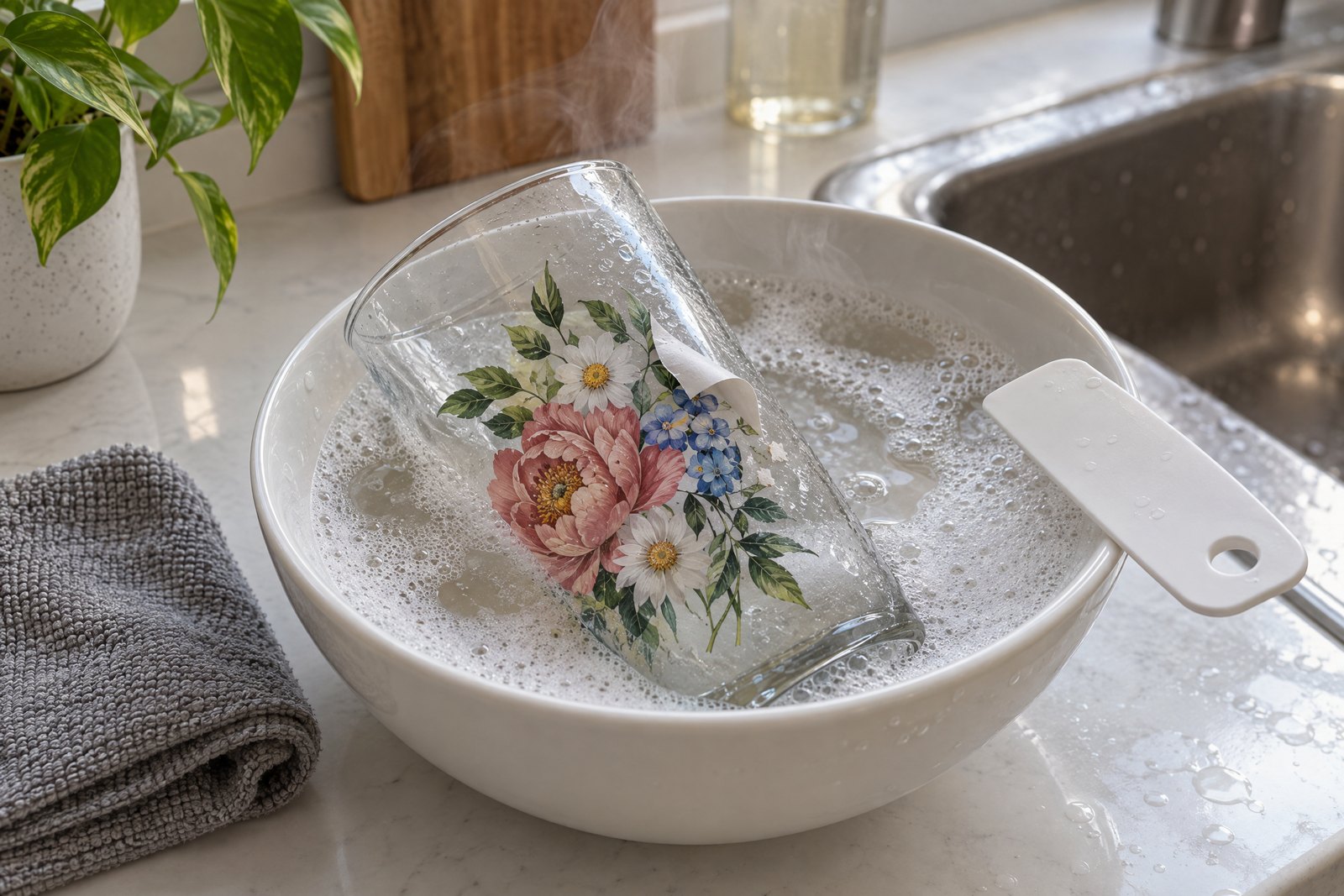
Glass cups and jars give you a gentler route that avoids the heat gun altogether: let the glass soak in hot water (around 170°F and not boiling) with a dish soap that cuts grease for about 10 minutes. When the adhesive has softened, get a plastic scraper under an edge and peel slowly, just like you would after heating, then clean and wash the glass.
What about acetone?
You will see acetone suggested for stubborn stickers. Be careful with it. eufyMake, a company that makes UV printers, gives these warnings. Don't use acetone on plastic or acrylic. On powder coated or painted cups or other items, it can dull or strip the finish. On bare glass and bare stainless steel, it is generally fine. Start with rubbing alcohol or an adhesive remover instead. If you still need acetone, use it only on bare glass or bare metal. Test a hidden spot first, and work with fresh air.
Putting a new sticker on the same spot
With the old sticker gone and the area washed, get the surface ready for its replacement: wipe it down with isopropyl alcohol on a lint free cloth, then let it dry completely before applying the new sticker. Our guide to applying UV DTF cup wraps without bubbles takes you through the rest of the application.
Need a replacement? Our UV DTF transfers stick to hard, smooth surfaces like glass, metal and hard plastic. New to UV DTF? Begin with what UV DTF is and how it works.
Frequently asked questions
Can UV DTF stickers be removed?
Yes. UV DTF stickers are made to last, about 2 to 5 years with good care, but heat softens the adhesive enough to peel them off. Warm the sticker with a hair dryer or heat gun for 20 to 60 seconds, lift an edge with a plastic scraper and peel slowly. Clean any leftover adhesive with rubbing alcohol or an adhesive remover once the surface is cool.
How do I remove a UV DTF sticker from a tumbler?
On a stainless steel tumbler, warm the sticker with a heat gun, lift an edge with a plastic scraper and peel slowly, warming again if it hardens. If the tumbler is powder coated or painted, test your alcohol or adhesive remover on a hidden spot first. On a plastic tumbler, use a hair dryer or a heat gun on low and keep it moving so the plastic doesn't warp.
How do I get UV DTF off glass?
A heat gun and a plastic scraper work best on glass. Warm the sticker until the adhesive softens, lift an edge and peel slowly. For glass cups, you can also soak the glass for about 10 minutes in hot water, around 170°F and not boiling, with a dish soap that cuts grease. Clean leftover adhesive with rubbing alcohol once the glass is cool.
Does rubbing alcohol remove UV DTF?
Rubbing alcohol is best for the leftover adhesive after you peel the sticker off with heat. Let the surface cool first, because 91% isopropyl alcohol is highly flammable. Wear gloves and safety glasses, work with fresh air, and test it on a hidden spot on plastic, painted or powder coated items.
Do I need a mask to remove UV DTF stickers?
Fresh air comes first, along with gloves and safety glasses. Open a window or work outside, and follow the label and the safety data sheet of the alcohol or remover you use. A regular dust mask won't protect you. It catches particles, not solvent vapor, as NIOSH explains. If the label calls for a respirator, use one made for that kind of vapor, in the right size and fitted well. Keep the room ventilated while you wear it.
By Jose Polanco, Content Editor, DTF Transfers Wholesale
Jose Polanco is the content editor at DTF Transfers Wholesale, responsible for the company's guides and product pages. The safety guidance in this article comes from product safety data sheets, a heat gun manual and NIOSH.
Text reviewed: October 8, 2026.